
The Holy Pilgrimage of Makkah
Article Gallery (2)
Click any image to view full & flip through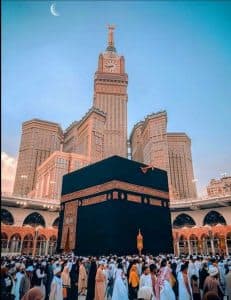
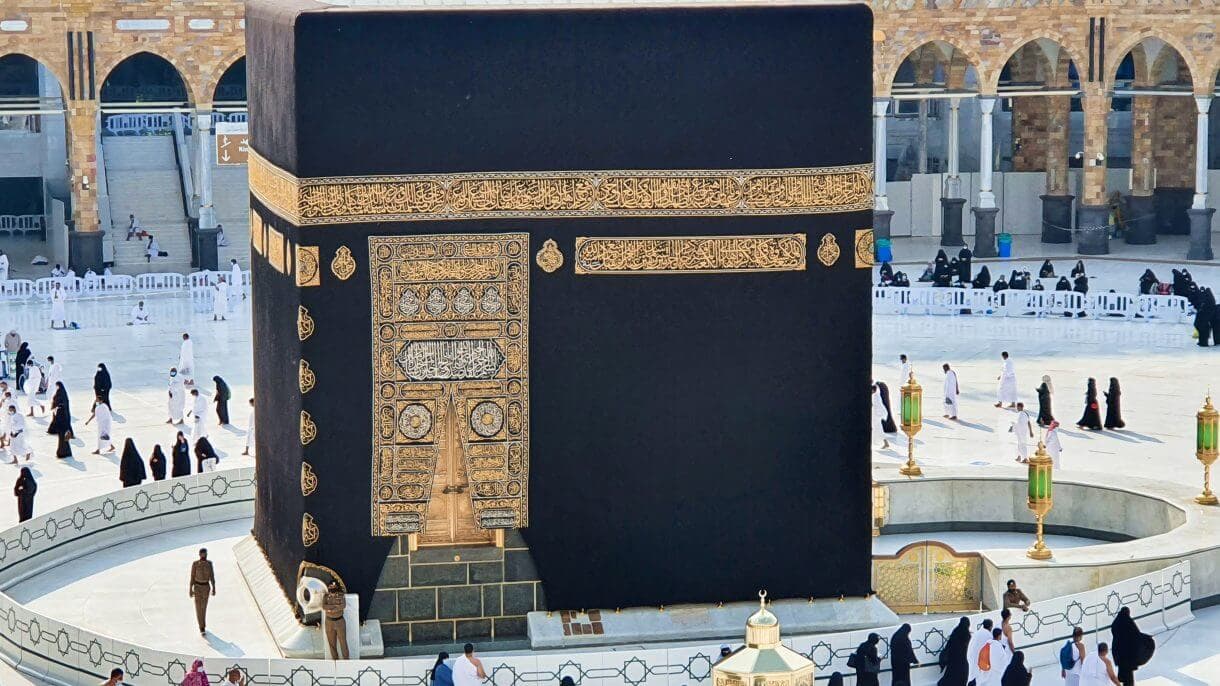
WHAT IS HAJJ? Hajj is one of the five pillars of Islam, the fifth of them which takes place during the month of Dhul Hijjah, the twelfth month of The Islamic Calendar. It is a sacred journey made by Muslims to the House of Allah(Masjid-al-Haram) in Makkah, Saudi Arabia. It is a spiritual duty which involves several worship processes which are done according to the injunctions of Allah (SWT) and the teachings of Prophet Muhammad (SAW). This final pillar of Islam is obligatory, at least once in a lifetime, upon all sane Muslims who reach the age of puberty and are physically and financially able. In recent times, many Muslims have observed Hajj through sponsorships, award, etc, however, it is a form of worship that requires not only financial and physical abilities, but emotional and social sacrifices. In the Holy Qur’an, Allah (SWT) commands us to take this sacred journey: “… And Hajj (pilgrimage to Makkah) to the House (Ka‘bah) is a duty that mankind owes to Allah, those who can afford the expenses (for conveyance, provision and residence); and whoever disbelieves (i.e. denies Hajj, then he is a disbeliever of Allah), then Allah stands not in need of any of the ‘Alâmin (mankind and jinn).”(Qur’an 3:97) Muslims who go for Hajj sacrifice the pleasure of being with their families, social gatherings or family functions, and work or career obligations throughout the entire period. For many people, undertaking this pilgrimage is once in a lifetime. It’s definitely an unforgettable experience!
SIGNIFICANCE OF HAJJ The main significance of Hajj is for personality development. The Prophet had explained to his Companions that the various rites of Hajj were a kind of symbolic repetition of the different phases of the life of the Prophet Ibrahim (AS). Every believer is required to adopt this life pattern in personal life. Some Hajj activities and their indications;
- Ihram—the attire of the pilgrim comprising two unstitched pieces of cloth is a symbol of simplicity.
- Tawaf, which involves circumambulating the Ka’abah seven times, indicates dedicating oneself for a purpose.
- Saee that is, running or walking seven times between the hills of Safa and Marwah, located near the Ka’abah. Saee encourages one to direct one’s efforts and struggles towards drawing in nearness to Allah.
- The pilgrim’s sacrifice of the animal is a way of taking the pledge to lead a life of sacrifice.
- Stoning of the devil, known as Ramy Al-Jamarat, is symbolic of rejecting satanic influence on oneself.
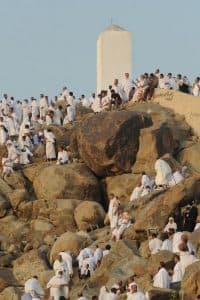
- Lastly, the pilgrims enter the plains of Arafah with the words “Labbayk Allahumma, Labbayk” (Doubly at Your service oh Allah! Doubly at Your service!). This is meant to remind one of the Day of Resurrection when every human being will have to stand before Allah for accountability.
Allah says in Suratul Fath: “You will enter the Sacred Masjid, God willing, perfectly secure, and you will cut your hair or shorten it (as you fulfil the pilgrimage rituals) there. You will not have any fear. Since He knew what you did not know, He has coupled this with an immediate victory.” (Q48:27) Our beloved Prophet Muhammad (SAW) had performed Hajj towards the end of his life. On this occasion, all of the Prophet’s Companions gathered in the plain of Arafah, which is 20 kilometres east of Makkah. Here, the Prophet delivered a sermon while being mounted on his camel. This sermon is famously known as Khutbah Hajjatul Wida, meaning ‘The Sermon of the Farewell Pilgrimage’.
THE REWARD FOR HAJJ Hajj offers its observers the opportunity to refresh their spiritual self, cleanse themselves of their sins and renew their faith. The following are some of the many reward for Hajj:
- Forgiveness of Sins - When we perform the Hajj rites properly we attain tremendous rewards. One of which is Allah’s forgiveness of all our past sins. This means our eternal happiness and success in Paradise. In the following authentic Ahadith we learn the following very inspiring teachings from the Prophet (SAW):
“Whoever performs Hajj for the sake of Allah and does not utter any obscene speech or do any evil deed, will go back (free of sin) as his mother bore him. (Bukhari, Muslim 2/3129)“
- Paradise - From the above Ahadith we learn that the everlasting reward for Hajj is Paradise, a life that is full of peace, happiness and prosperity. This is because in Hajj mabrur, we perform nothing but deeds of righteousness – deeds that deserve Allah’s Reward of Paradise to all righteous Muslim men and women. Our Creator makes this clear to us when He says:
“But those who believe and do deeds of righteousness, We shall soon admit them to Gardens, with rivers flowing beneath, to dwell therein forever. Allâh’s promise is the truth, and whose word can be truer than Allâh’s?” (Qur’an 4:122)
- Acceptance of Supplications - Another beautiful reward for performing Hajj is the acceptance of our supplications. If we ask for Allah’s forgiveness, He, the Most Forgiving responds to our prayer as narrated in the following Hadith:
Abu Hurayrah (may Allah be pleased with him) narrated that the Prophet (SAW) said:“Those who perform the Hajj and those who perform the Umrah are people who have come to visit Allah. If they supplicate Him He will respond to them, and if they ask Him for forgiveness He will forgive them.” (Tirmidhi 2536 and Ibn Majah).
- Patience - Another positive attribute that we develop in the performance of Hajj is patience. We develop patience not only in the performance of the various Hajj rituals but also in remembering how Prophet Ibrahim and his family sacrificed in building the Ka’bah, the first Holy House of Allah. The patience that Hajar ( Prophet Ibrahim’s wife) had was an unrivalled one. She went with her husband to a barren land as commanded by Allah, with no food, no water and no people around? How much patience and endurance can one afford for the sake of pleasing The Rabb? Just how many of us could pass the test that Prophet Ibrahim had when Allah the Almighty commanded him to sacrifice his own son?
In Hajj journey and in the performance of all the prescribed Hajj rituals, one may feel very uncomfortable for any reason. But one should not let any temporary difficulties in life hinder his devotion to Allah, especially during the Day of ‘Arafât on the 9th of Dhul-Hijjah when more devotion supplications to Allah for His forgiveness, blessings and mercy is required. We should be patient because Allah commands us to patiently persevere. We should remember that Allah shall test us: “Be sure We shall test you with something of fear and hunger some loss in goods or lives or the fruits (of your toil) but give glad tidings to those who patiently persevere.” (Q2:155) Abu Hurairah (RTA) narrated that the Prophet (SAW) said, “A Muslim male or female, remains subject to trials (in this world); in respect of self, children and property till he or she faces Allah the Exalted (on the Day of Judgment) in a state in which all his or her sins have been remitted.” (Tirmidhi 49).
